 @basic.glitch
 Ko-fi
Ko-fi
 GitHub
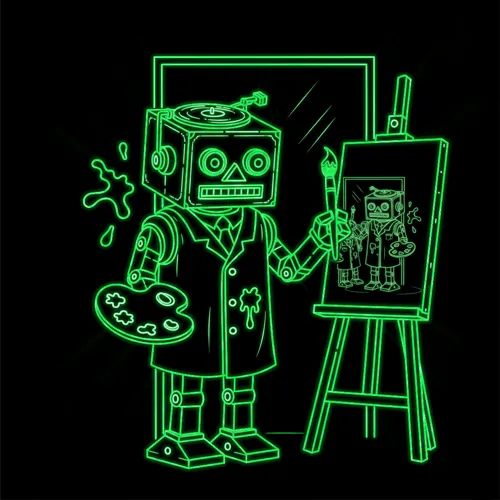
At seventeen, a pencil and a blank page. No plan. Just line following line, each one responding to the last, building something that had no name yet. The style that emerged — fluid, continuous, psychedelic in the original sense — came from letting the hand move without asking permission from the brain. Call it LSD-flow line work. That's what it felt like. The line doesn't stop; it just decides where to go next.
The digital tools came later, and they brought a revelation that changed everything: the UNDO key. Not as a crutch — as a philosophy. The freedom to try anything without consequence, to push further than you'd dare in ink, to make a mark and then unmake it and make it again differently. Traditional artists will tell you that's cheating. Traditional artists are wrong. UNDO is just iteration at speed.
Twenty-eight years of drawing. Thirty-one years of music. The two disciplines inform each other in ways that are hard to explain but easy to hear if you look at the work long enough. Rhythm is visible in the line. Frequency is visible in the color. The Sangre de Cristos series happened because standing before a 14,000-foot peak in Colorado felt like a chord change — something that big and that old doing something structural to the air around it. The circuit board rising from the valley is the signal that mountain is always transmitting. BasicGlitch just found the right filter to see it.